Main Groups of the Underlying Causes of Death in South Africa 2011


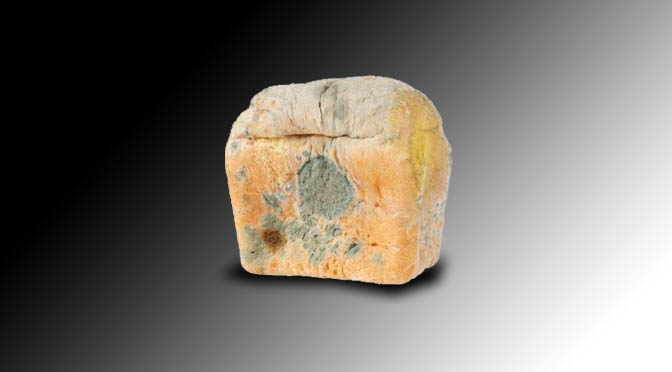
Detractors claim that the movement is just a fad, or worse, that those who have embarked upon it without an official diagnosis are a bit crazy. After all, simply “feeling better” following gluten elimination is not considered to be proof of anything within the conventional medical system. Biopsies, antibody, and genetic tests later, if nothing is found, and you still think gluten – this ‘sacred,’ omnipresent grain – is a problem, you might just get referred to a psychiatrist.
But anecdotes and “subjective experience” aside, the type of clinical research that constitutes “Truth,” with a capital T, from the perspective of the dominant medical establishment, can be found on the National Library of Medicine’s biomedical database known as MEDLINE. This vast bibliographic archive contains over 21 million citation entries, which as of time of this writing, contains 9,776 references to gluten.
There has been a sharp increase in interest and research on the topic of “gluten intolerance” – although we prefer to label the subject “gluten toxicity,” in order to shift the focus away from the “victim” back to the “aggressor,” the gluten itself. In 1971, there were 71 studies listed on MEDLINE which referenced gluten. Last year in 2011, there were 514.
One of our many interests here at GreenMedInfo.com is to identify “Problem Substances,” which is why we have created an index by that name with 698 subjects listed from A-Z. If you navigate to WHEATunder the “W’s” you will find a list under “Advanced Topics” with 205 health conditions and/or adverse health effects associated with wheat consumption, all of which were determined solely through research in peer-reviewed and published medical journals indexed on MEDLINE.
You will also find, below the listed diseases, a “pharmacological actions” field set which lists 20 distinct ways in which wheat harms the body, e.g. nerve-damaging (neurotoxic), immune-damaging (immunoreactive), inflammatory, etc.
At present, the conventional medical establishment only identifies a handful of disorders likely to be caused by wheat consumption, such as:
These conditions, however, are but the tip of a massive “celiac” iceberg. In a previous essay, The Dark Side of Wheat, we discussed the problem from a more philosophical perspective. There is now, however, a huge dataset firmly establishing the likelihood that wheat intolerance, or better yet, wheat toxicity, is a universal, human species-specific problem, occurring only in differing degrees, and mostly sub-clinically, at least through the optic of conventional screenings and technologies.
One must also account for the “invisible thorn,” which is wheat lectin – known more technically asWheat Germ Agglutinin (WGA) — and which can cause a broad range of adverse health effects, even while being undetected through conventional screenings. Learn more about this topic in our essayOpening Pandora’s Bread Box: The Critical Role of Wheat Lectin in Human Disease.
Original article http://www.greenmedinfo.com/blog/200-clinically-confirmed-reasons-not-eat-wheat
Article and image attributed to www.greenmedinfo.com
If you live or work in the Bryanston area make sure you visit Weleda Pharmacy Bryanston and start using the BEMER system regularly.
It doesn’t matter what chronic diseases you have; if you’ve just injured yourself; or if you only have flu, BEMER will gently, safely and naturally optimise crucial physiological processes in your body so that it can heal itself.
We recommend that you apply the therapy for a minimum of 8 minutes at least 3 times per week for a minimum of 10 treatments. Optimum results are achieved from twice-daily treatments at home but this is a convenient way to evaluate the benefits for yourself without buying your own BEMER System upfront.
It is interesting to check your Oxygen Saturation Level (SpO2) and your Blood Pressure before and after each session. This way you will be able to see the metrics of the influence of BEMER on your physiology.
Remember BEMER is licensed for sale by the South African Department of Health (549/7826).
Want to know how it works? Read this post.
Ratang Bana’s objective is to respond to the socio-economic and healthcare challenges of its immediate community. Alexandra is typical of African township culture.
Its residents are very poor: most receive social grants and they do not enjoy adequate resources and services such as education, healthcare, sanitation, housing and security.
I was very fortunate to meet Jane Simmonds at the launch of the Redhill Foundation (Redhill School’s bursary programme for under-privileged scholars) on 12 June 2014, where the guest speaker was Advocate Thuli Madonsela (recently polled as one of the world’s top 100 most influential people of 2014 – Time Magazine). Jane mentioned that she was currently involved with Ratang Bana as part of her thesis for her Master’s in Public Health. I was instantly intrigued as the organisation could potentially offer its beneficiaries free BEMER treatments, similar to our BEMER programme in the Marico, North West Province.
I met Ingrid the following week at which time I explained to her the technology, explained the health benefits and then showed her interviews of two BEMER users in Pella.
We both agreed that I would place a BEMER System at Ratang Bana for her to provide complementary health support to Ratang Bana’s selected beneficiaries.
Ingrid gave me a summary of her life’s journey and the reasons for founding Ratang Bana. She is an inspiration to me and I am looking forward to spending more time with her, the Ratang Bana staff and volunteers and, of course, the organisation’s beneficiaries.
On 3 July 2014 I delivered, installed and demonstrated the BEMER system and therapy programme on 3 July 2014. My good friend Owen Dell,who is a a respected local and international cinematographer, captured video of this so that we can add the content to a future documentary about BEMER and its impact on underprivileged African communities.
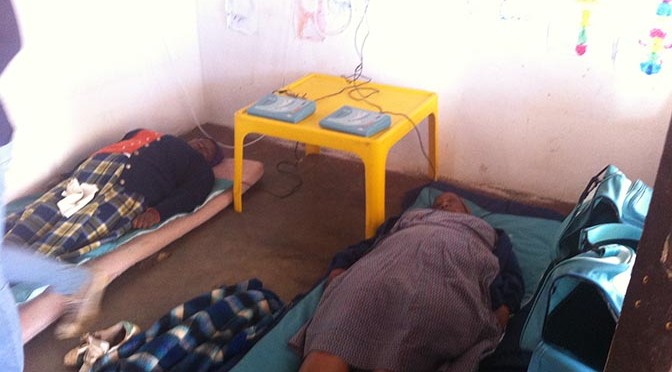
We are very excited to watch how this technology will add to the quality of life of the Ratang Bana beneficiaries – similar to what’s happening in Pella. We caught on film Ingrid’s story and her determination to make the lives of her community members easier and more fulfilling. Most of these people are living in abject poverty and the HIV+ figures are astounding. Apparently Alexandra healthcare services and facilities are entirely inadequate and unreliable: general chronic medication is not always in stock at state run healthcare facilities and outpatient doctors are not on duty every day of the week, as one would expect.
This setting is ideal for demonstrating the simplicity, cost-efficiency and social value of placing a BEMER system in a poor, under-resourced community that is bearing the brunt of Africa’s most burdensome communicable (infectious) and non-communicable (lifestyle-related) diseases.
Subscribe to our website to follow the Ratang Bana BEMER story as it unfolds. If you wish to make a much needed donation to Ratang Bana or wish to assist Ingrid by volunteering your time to her activities then please contact Ingrid directly on 084-452-0384.
After having placed 9 BEMER Systems at selected stations in the Marico region in February 2014 we (Stuart and Richard) returned in June 2014 to assess the impact of this informal BEMER programme.
Tumi runs established development and community projects from her property in Pella, North West Province, South Africa. She runs a nursery school with intermittent and unreliable funding from limited sources. Two German volunteers are placed at this project to assist Tumi for twelve months after which they are replaced by the next two volunteers.
We approached Tumi in December 2014 to explain BEMER technology to her and explore whether or not she would be interested in adding BEMER therapy to her facilities. Pella residents would be able to use the BEMER Systems free of charge and experience life-changing health benefits.
We arrived there on Tuesday at 11am to catch up with Tumi and get some feed back directly from the community members that have been using BEMER since February 2014.
A couple of the younger HIV BEMER users were not so keen to discuss their results as the disease carries a burdensome stigma that is harboured by massive emotional insecurities. I have to say though that they all looked very healthy to me and were in good spirits. They all attend their bi-weekly BEMER sessions without fail!
We discussed with Tumi the possibility of expanding the BEMER capacity by adding another three systems to the programme and lobbying for an additional two German volunteers to operate the ‘centre.’
Critical to the success of this programme is the active participation of the provincial department of health and the North West University, specifically its Hypertension Research Programme (HART) and its Mitochondrial Research Programme. We will present our plan to the NWU and publish the outcomes on this website.
We visited Santa, Jolene and Jen to learn about the life-changes that have been experienced by the locals that have been using BEMER since February.
It is clear that there is an overwhelming indication that the majority of people that use BEMER have experienced positive health benefits.
We would love to post this video now but the sound quality is terrible and spoils it. We will see what we can do do to enhance the quality of the audio and then post it.
There is something very exciting happening in this corner of the world. A poor community is experiencing tangible health benefits from regular BEMER use, regardless of their conditions.
We will continue to post developments on this website in the coming weeks.
During February 2014 we placed 11 BEMER Systems at various community ‘stations’ in the Marico district to informally evaluate the impact that this technology can have on individuals in poor and remote rural locations in South Africa.
The provincial department of health faces challenges in delivering complete healthcare services to rural communities.
We will visit the various stations on Tuesday 10 June to see how regular BEMER treatments have changed the lives of those in need of lifestyle/medical interventions. We placed the BEMER Systems in these communities so that they may find relief and/or recovery from their chronic ailments or diseases.
We hope to capture some video interviews with these people and post them on YouTube.
Sign UP to this website or Like Get Well Now’s Facebook page to receive automatic updates.
Low Aerobic Energy Production and Pain in Fibromyalgia – Is Your Microcirculation to Blame?
After reading this article one can see why BEMER is such a powerful support therapy for people suffering from Fibromyalgia.
Understand what has happened in the brain, how it can be remedied and, more importantly, how it can be avoided.
This is caused by a blockage (often a blood clot) of a blood vessel in the brain, depriving brain tissue of oxygen and causing brain cells to die within minutes.
This is caused by the rupture of a blood vessel in the brain, causing extensive bleeding, again depriving brain tissue of oxygen, the affected cells also dying within minutes of the event.
Both types of stroke can cause brain damage, paralysis, indefinite coma or death. Immediately after a cerebral event of this nature, surgery can prove beneficial. It is very common for stroke survivors to enter into a rehabilitation programme so that they may regain mobility, speech and the functioning of senses, or learn to cope without one or more of their faculties should they be unresponsive to rehabilitation techniques.
The tiniest blood vessels (capillaries) are the most critical part of our blood circulation system as they feed organ tissues with life-giving oxygen and nutirents.
When capillaries have been damaged or have been obstructed from receiving blood then the cells in the vicinity of the affected capillaries begin to dysfunction and could eventually die (should blood flow not be rapidly re-established).
Surgery can be very successful or prove fruitless, due to the nature and location of the stroke in the brain and the time taken to respond to the cerebral event. Neurosurgeons in South Africa are world-class and are extremely experienced with stroke complications.
Medication can only be delivered by the blood and if the vessels that carry the blood are not functioning properly then there is a strong probability that medication may not even be delivered to the affected area. Aspirin and similar drugs are often a first-line response to stroke.
Of course there are. More often than not we Google a health condition even before we consult with a physician unless the situation is a life-threatening emergency.
In the case of stroke the conventional approaches to prevention, cure and rehabilitation generally lie in the hands of the western medical fraternity.
When we realise that conventional medicine has not provided us with the degree of recovery we were expecting we eventually look for something else, for example: alternative and complementary therapies, ancient plant remedies and energy healing. We’ll eventually ‘try anything’ to regain quality of life.
This is tricky territory because even though effective options are genuinely rehabilitative there are still some people out there that are prepared to scam you, especially when you are vulnerable. Just be aware and investigate the therapy thoroughly before committing yourself to anything.
When dealing with the physiology of the human organism there are several things to consider and explore.
The body is a physical system that is governed by the universal physical principles of matter – something that still puzzles us but in which we are investing vast amounts of money to discover the absolute truth (Large Hadron Collider).
Matter behaves in certain ways because of energy forces that have so far been defined by our most revered physicists and scientists. What we do know for certain is that energy, in its various forms, controls the behaviour of matter across the entire universe.
The charged particles (ions) that comprise your entire body are governed by these forces and everything is designed to function perfectly. When we interfere with this amazing ballet of physics, by eating poorly, not exercising enough and indulging in toxic chemicals (smoking, etc), the matter in our body struggles to perform as well as it used to: according to the issued instructions of our DNA. This is when we start to see symptoms of chronic diseases of lifestyle.
It is a known fact that every living cell’s membrane has an electrical potential of between -40mV to -90mV. This potential initiates and manages ion transfer in and out of the cell. The interior and exterior voltages of the cell membrane are governed by the metabolic requirements of each individual cell, changing the potential according to what specific nutrients are required in the cell and what waste products must removed. It is very complex but incredibly fascinating!
When the cells require oxygen and nutrients but cannot receive them because the microcirculation is not functioning properly the cell becomes acidic and then dysfunctions (doesn’t metabolise correctly). The cell will continue to dysfunction and may eventually die if it does not receive adequate oxygen and nutrients.
Yes, there are several therapies that can do this and the most common ones are:
The most researched (15 years) and most effective of these is BEMER. It emits a special patented signal that has been proven to optimise microcirculation and immune system parameters:
Many of our stroke customers have experienced incredible results even after more than a year of having a cerebral accident. Some have begun swallowing again, speaking and walking.
BEMER is registered with the South African Department of Health (Reg no: 549/7826) ensuring its safety. BEMER is also represented in over 40 countries and is used by doctors, top sports people (Roger Federer, Sharks Rugby Team) and private individuals.
With all the research behind it and the knowledge that there are 6000+ happy South African BEMER owners you can rest assured that the physiological benefits are not just smoke and mirrors but the result of ongoing international scientific research and clinical evaluations.
Image by David Castillo Dominici – www.freedigitalphotos.net